
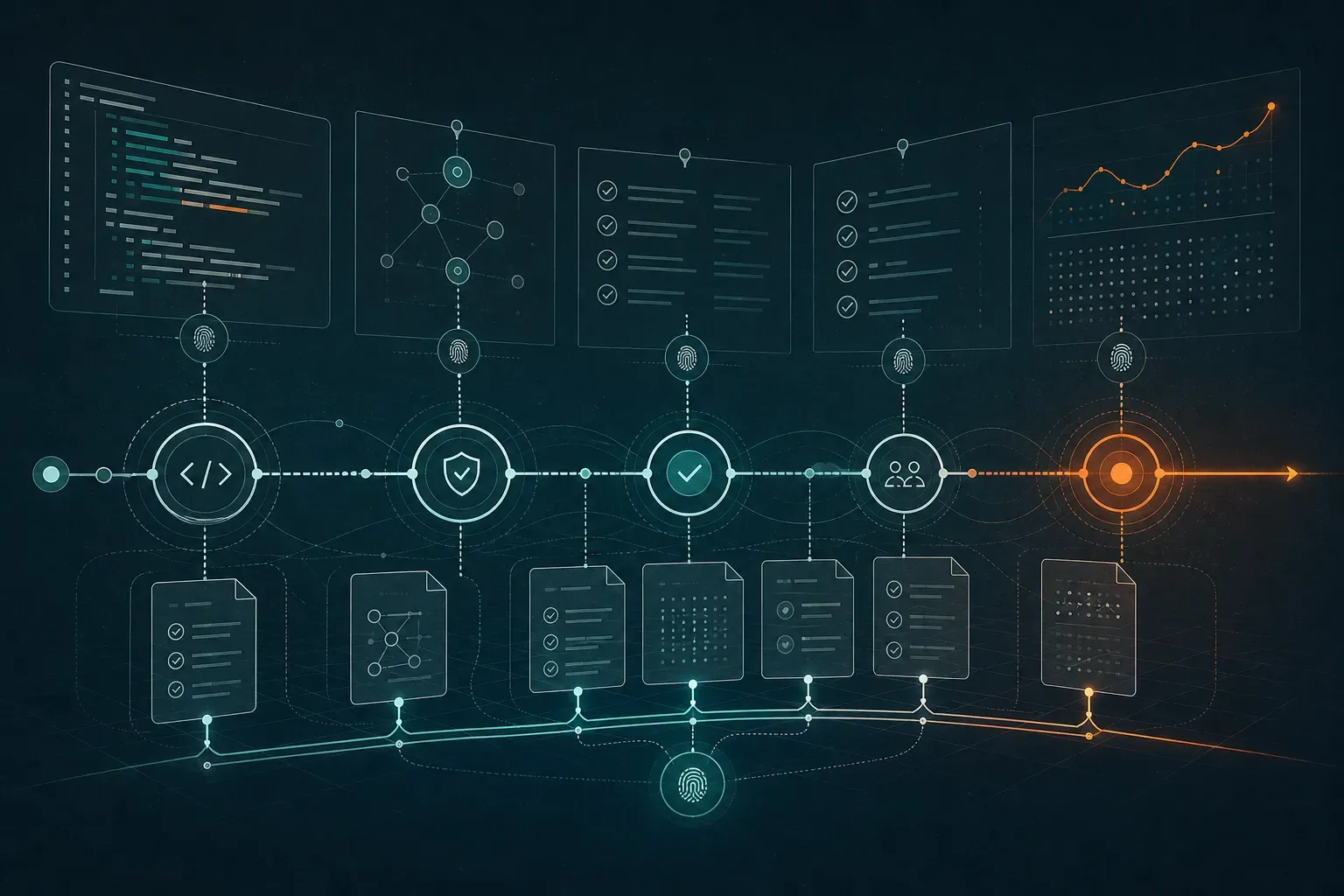
Your buyers require security evidence your delivery process does not produce.
Per-release security reports, an SBOM, vulnerability decisions, signed artefacts, a documented disclosure route. Right now these are assembled by hand under deadline pressure, if at all. From 11 September 2026 the Cyber Resilience Act makes one of these a legal duty rather than a buyer preference: reporting an actively exploited vulnerability. The bill of materials and the release evidence follow on 11 December 2027.
- Indicative range
- Typically €12,000–25,000, scoped after review
- Shape
- Usually four to eight weeks, remote.
What you are already seeing
- Security documentation is produced for an audit, then goes stale until the next one.
- Nobody can say what is in a given release without rebuilding the answer.
- Each large customer imposes slightly different supplier requirements.
- There is no agreed route for someone outside the company to report a vulnerability.
What gets examined
- 01
What evidence your buyers and the applicable regulation actually require, and by when.
- 02
Which of it the pipeline could emit automatically and currently does not.
- 03
Where vulnerability decisions are made, and whether anyone records the reasoning.
- 04
Whether the disclosure and reporting route would survive being used under time pressure.
What you are left holding
- 01
A delivery process that emits its own evidence, per release.
- 02
A vulnerability triage rule set with recorded decisions rather than a scanner dump.
- 03
A documented disclosure and reporting route with named responsibilities.
- 04
A gap list against the obligations that apply to your products, sequenced by deadline.
Before you send anything
Plain language is enough — the system, who owns the outcome, and the date that matters. Keep confidential reports, credentials and production data out of a first message; a secure exchange route is agreed before any of it moves. Indicative ranges are exactly that: the scope, exclusions and price are confirmed in a written proposal before work starts.