
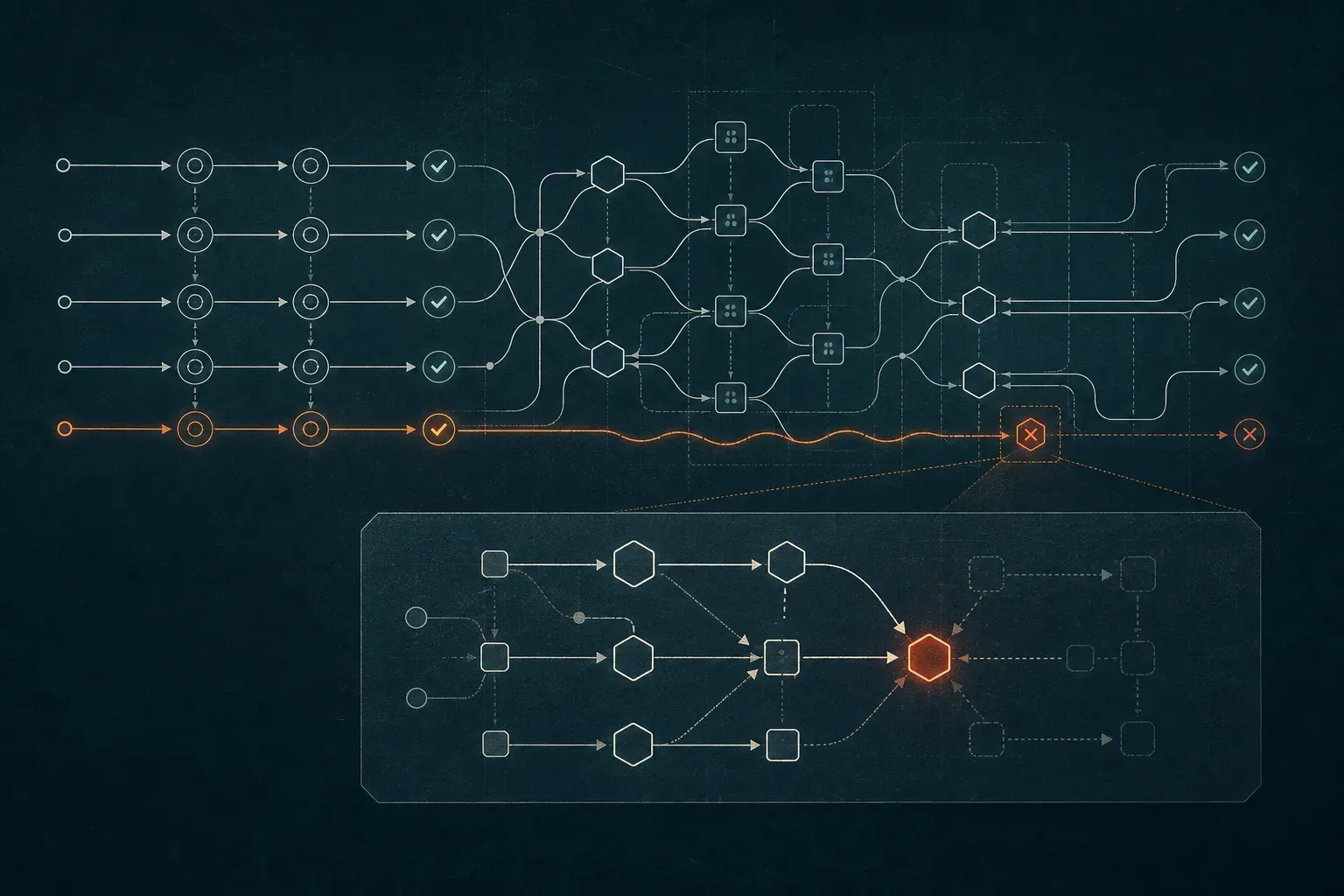
Architecture and ownership have drifted, and change has become expensive.
Platforms have multiplied, boundaries moved without a decision, and temporary exceptions now operate as permanent architecture. Every change costs more than the last one, and no single person can describe the whole system with confidence.
- Indicative range
- Typically €14,000–22,000, scoped after review
- Shape
- Usually two to four weeks, remote.
What you are already seeing
- Teams optimise their own systems while cross-system dependencies grow.
- Modernisation milestones exist without a dependency or ownership model.
- New platforms are proposed before existing duplication is measured.
- Nobody owns the integrations that everything depends on.
What gets examined
- 01
The deployed reality, compared with the diagrams and the standards.
- 02
Duplicated capability, unmanaged integrations and unowned components.
- 03
Which constraints come from architecture and which from how the organisation is arranged.
- 04
What sequence of change is actually feasible.
What you are left holding
- 01
A current-state model built from evidence, not from documentation.
- 02
Root causes separated from the symptoms they produce.
- 03
Target options with what each one requires.
- 04
A prioritised change sequence with a defensible first step.
Before you send anything
Plain language is enough — the system, who owns the outcome, and the date that matters. Keep confidential reports, credentials and production data out of a first message; a secure exchange route is agreed before any of it moves. Indicative ranges are exactly that: the scope, exclusions and price are confirmed in a written proposal before work starts.